The Highland Games, a cherished tradition in both Scotland and among Scottish American communities, trace their origins back centuries. These events, known for their vibrant celebration of Scottish culture, heritage, and camaraderie, have grown to become a significant part of Scottish American life. The history of the Highland Games is as robust and colorful as the tartans worn by its participants, interwoven with tales of family clans, ancient traditions, athletic prowess, and cultural pride.
The origins of the Highland Games are somewhat cloaked in the mists of time, with early records suggesting that they may have started during the reign of King Malcolm III of Scotland in the 11th century. King Malcolm is said to have summoned clan chiefs from across the land to participate in a footrace to the top of Craig Choinnich near Braemar, with the aim of finding the swiftest and most agile warriors to serve as his personal messengers. This early form of competition laid the groundwork for what would evolve into the Highland Games.
The familial aspect of the Highland Games is significant, as these events often serve as grand gatherings for clans, allowing them to unite, compete, and celebrate their heritage. Many of the participants can trace their lineage back to the early days of the games, and they wear their clan’s tartan with pride. The games have not only preserved ancient customs and traditions but have also reinforced bonds among family members and clans, fostering a deep sense of community and mutual respect.
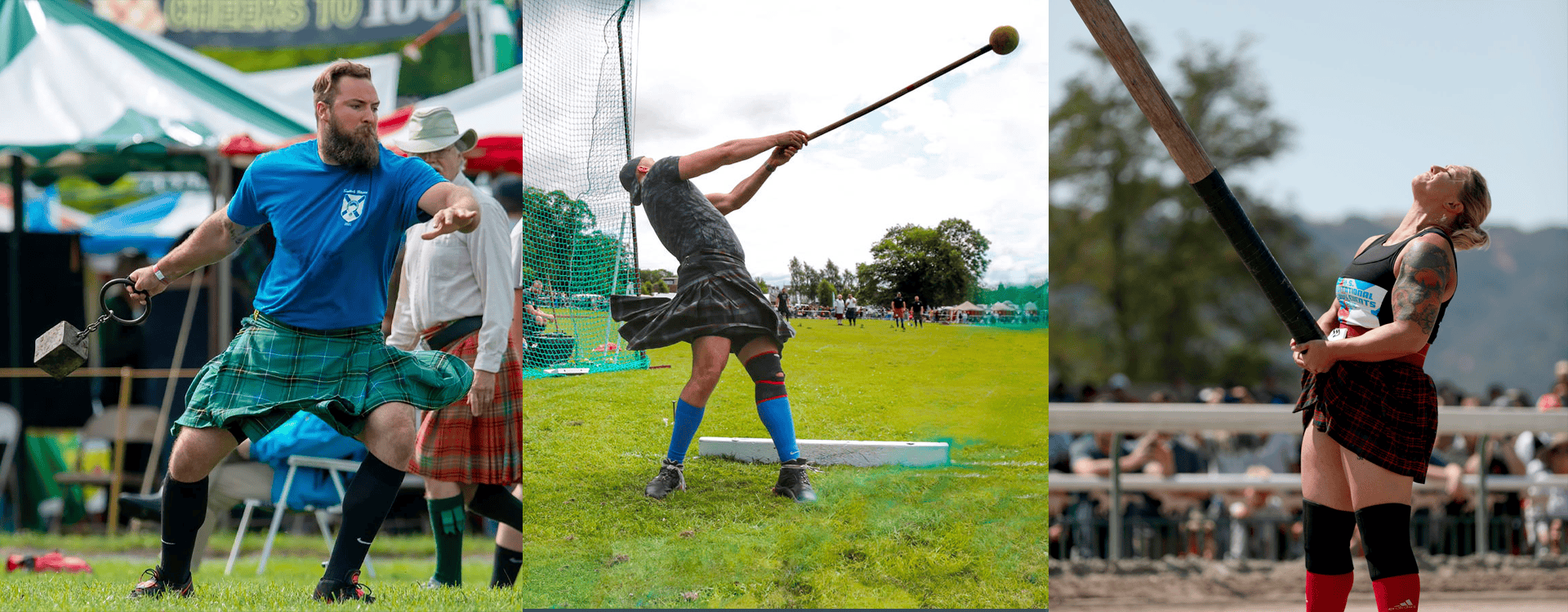
At the heart of the Highland Games are the athletic events, which have become symbolic of Scottish culture. These include the caber toss, where participants lift and flip a hefty log; the hammer throw, which involves hurling a weighted ball attached to a long pole; and the stone put, akin to shot put but using a large stone. Each of these events requires tremendous strength, skill, and technique, and they serve as a testament to the athletic endurance of the competitors.
Beyond the sports, the Highland Games are also famous for their cultural elements, particularly Scottish dancing. Highland dancing, which includes traditional dances like the Sword Dance and Highland Fling, showcases the grace and skill of the dancers, often clad in traditional kilts. These dances, many of which have been passed down through generations, tell stories of Scottish history and folklore, making them an integral part of the Highland Games.
Another fascinating component of the Highland Games is the presence of dogs, particularly in sheepdog trials. Participants demonstrate their dogs’ abilities to herd sheep, showcasing not only the intelligence and agility of the dogs but also the skill and training of their handlers. These trials are a nod to Scotland’s pastoral traditions and add an element of pastoral life to the festivities.
The musical backdrop of the Highland Games is undeniably the sound of bagpipes and drums. Pipe bands, often in vibrant tartan regalia, provide a stirring soundtrack with their powerful melodies. The intricate and emotive music of the bagpipes, coupled with the rhythmic beat of the drums, captures the spirit of Scotland and adds a profound sense of occasion to the games.
Over the centuries, the Highland Games have expanded beyond the Scottish Highlands, finding a new home among Scottish diaspora communities worldwide. In places such as the United States, Canada, Australia, and New Zealand, these events are organized by various Scottish societies and associations, including the Scottish American Athletic Association. This globalization has not only helped preserve Scottish heritage but also introduced new generations to these time-honored traditions.
Despite the passage of time and the geographical spread, the essence of the Highland Games remains steadfast. They are a celebration of strength, skill, music, dance, and community. As each year sees the gathering of participants and spectators alike, the games stand as a vibrant reminder of the enduring legacy and rich cultural heritage of Scotland.
In conclusion, the Highland Games are more than just a series of athletic contests; they are a living tapestry of Scottish culture, woven with threads of history, family, and tradition. Whether it’s the thunderous applause at the end of a successful caber toss, the intricate steps of a Highland dance, or the soulful lament of a bagpipe, each element of the games echoes with the spirit of Scotland. For those who participate and spectate, the Highland Games are a heartfelt connection to their roots, a celebration of their heritage, and an expression of pride that transcends borders and generations.